People choose aluminum for a pergola precisely because it "needs no maintenance". It doesn't rot like wood and doesn't rust like ordinary steel. That's only half true. The structure itself really is very durable, but for it to look as good many years on as on installation day, especially by the sea or next to a bioclimatic system, a little regular care is still needed. Here is what it consists of.
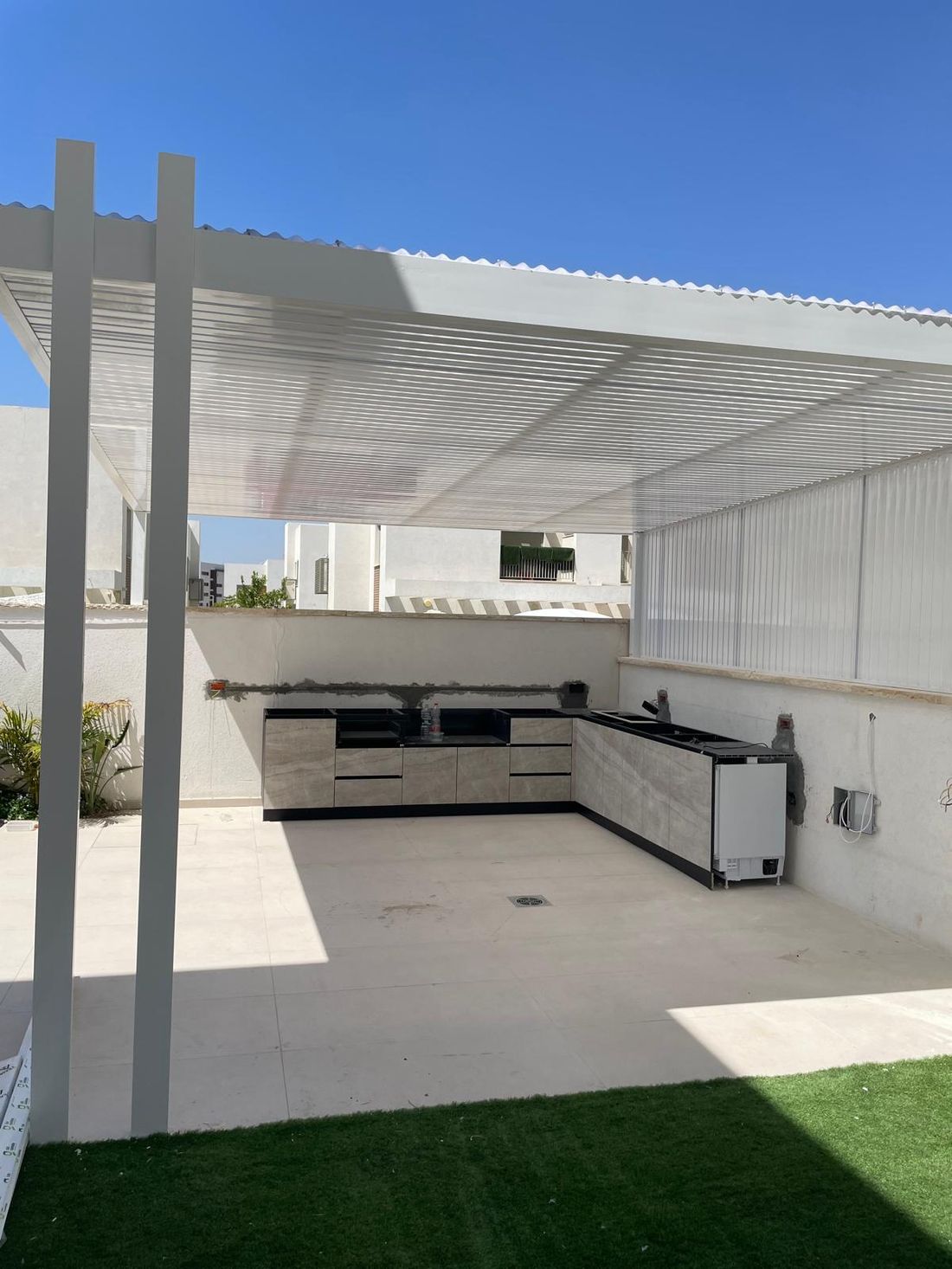
About the warranty: the material we use for pergolas comes with a 10-year manufacturer warranty on the powder coating. It protects against fading and peeling of the paint under normal use, but it does not cancel the basic care described here: the coating warranty does not cover damage from improper cleaning or aggressive chemicals.
Why aluminum pergolas still need care
An aluminum profile is usually covered with powder paint, which protects the metal and lasts a very long time, but not forever. Dust, pollen, exhaust fumes and limescale from water settle on it. Over time all of this dulls the coating, and if it isn't cleaned it can create spots where moisture stays longer than it should. Besides, the screws, hinges and louver mechanism are most often made not of pure aluminum but of steel or alloys that are already prone to corrosion.
Regular cleaning: how and how often
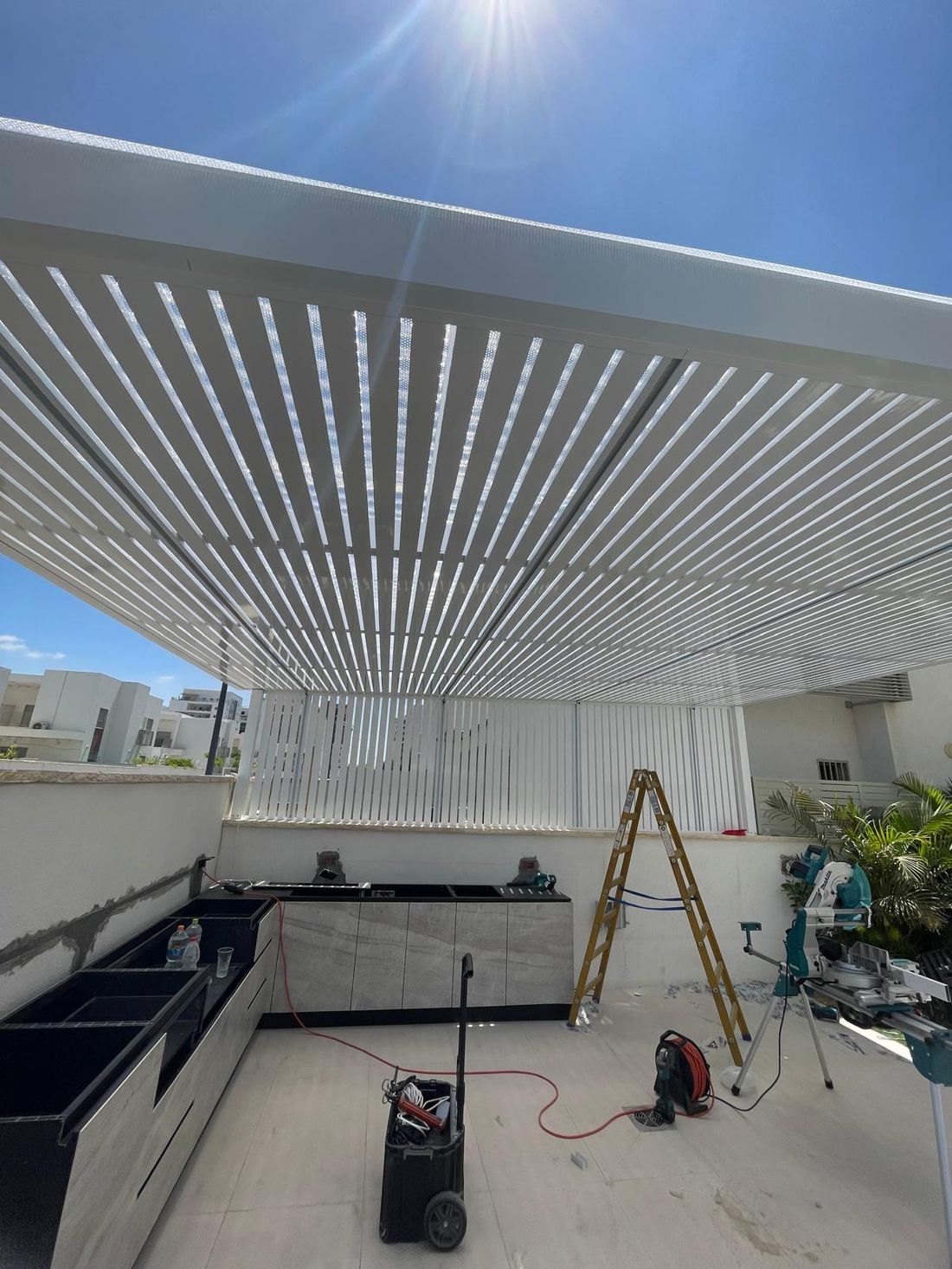
Once every 1 to 2 months it's enough to wipe the beams and posts with a soft sponge, water and a little neutral soap. The same product used to wash a car works very well. Then rinse with clean water from a hose and let it dry so there are no streaks from hard water.
- Don't use abrasive sponges, metal brushes or powders. They scratch the powder coating
- Don't use bleach or aggressive chemicals. They eat away the protective layer
- A pressure washer can be used on beams and posts, but from a distance, not point blank, and never aiming the jet at the motor, sensors or seals
Special care by the sea: salt and corrosion
If the plot is not far from the coast, in Herzliya, Netanya or Tel Aviv, salty sea air speeds up corrosion several times over, even if the profile itself is aluminum. Salt settles on the metal and especially on steel fasteners, hinges and the moving parts of the mechanism. For such plots it's worth cleaning more often, every 2 to 4 weeks, always rinsing with fresh water, and every few months checking the condition of the screws and joints.
Maintaining the louvers and motor of a bioclimatic pergola
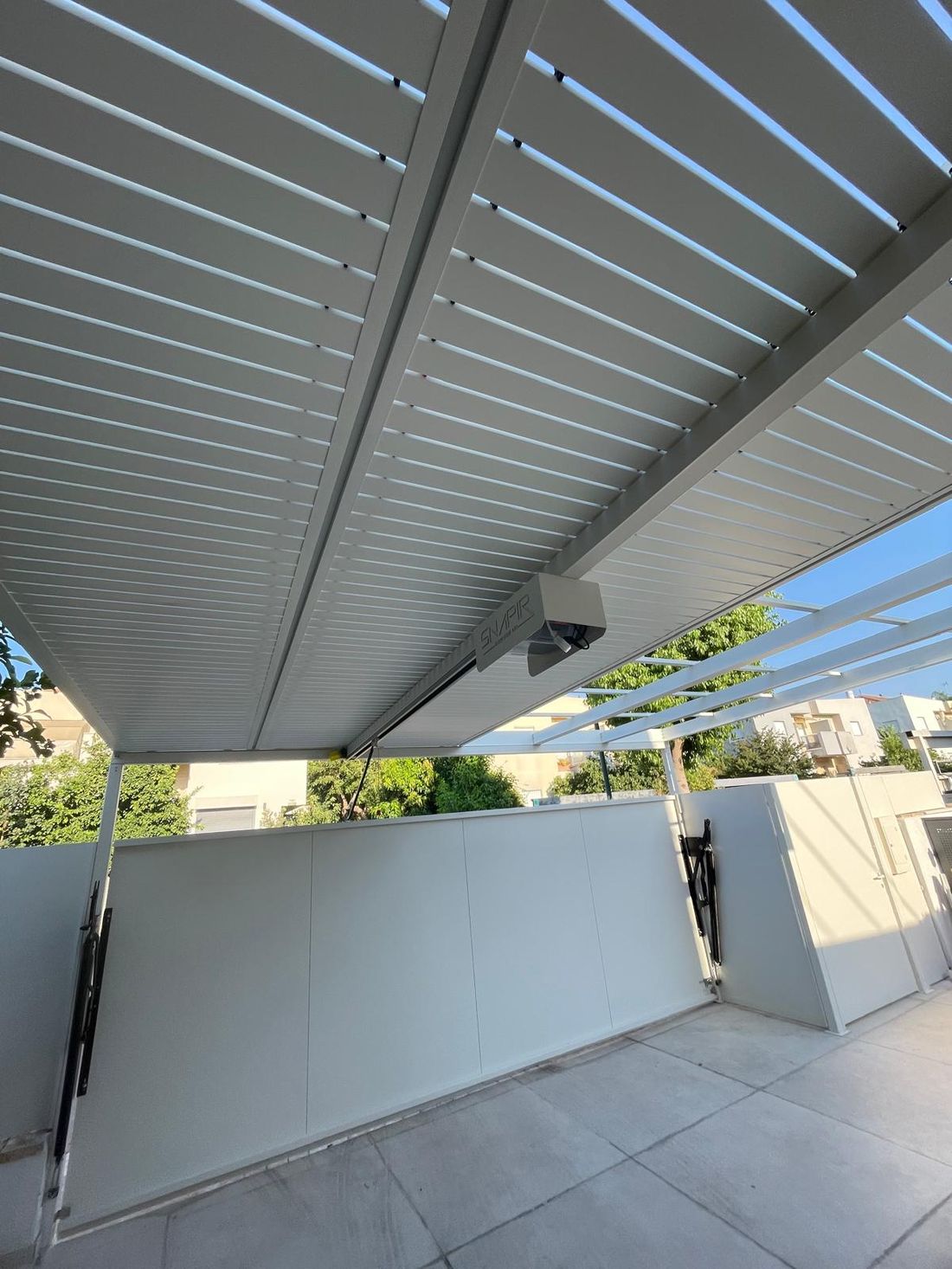
If you have a pergola with rotating louvers and an electric drive, it has separate points worth watching:
- Rain sensor. Keep it clean of dust and leaves, otherwise it may not trigger in time
- Louver tracks. There should be no twigs, leaves or debris that stop them from closing fully
- Motor. If an odd noise appears or the louvers don't close all the way, don't fix it yourself. It's a reason to call a technician
- Preventive service. Manufacturers usually recommend a technical check of the mechanism once a year, including checking the lubrication of the moving parts
Gutters and drainage
On pergolas with a closing roof, water leaves through a drainage system built into the beams. If leaves, dust or construction debris get in, in the rainy season water can spill over the edge instead of flowing down the channel. Before the rainy season starts (usually October to November) it's worth checking and, if needed, cleaning the drainage channels.
Common care mistakes
A pressure washer aimed point blank at the motor or sensors. This is the most common cause of electronics failures on a bioclimatic pergola.
Aggressive chemicals and bleach. They eat the powder coating and speed up corrosion where they touch.
Ignoring loose fasteners. A loose screw is not a trifle. It's the start of a corrosion spot and a potential risk to the stability of the structure.
Repairing the motor yourself. It's better to leave the electronics and the remote to a service, so you don't lose the manufacturer's warranty.
When to call a technician: unusual motor noise, louvers that don't close fully, visible corrosion on the joints, a remote or rain sensor that works incorrectly.
FAQ
How often should an aluminum pergola be washed?
Under normal conditions once every 1 to 2 months is enough. If the pergola is not far from the sea, wash it more often, every 2 to 4 weeks, so salt does not settle on the metal and the fixings.
Can a pergola be washed with a pressure washer?
The frame and beams can, from a safe distance. But do not aim a strong jet straight at the motor, the rain sensor or the rubber seals. You can damage the mechanism and push water where it should not be.
Does an aluminum pergola rust?
Aluminum itself does not rust, because a natural protective film forms on it. But steel fasteners, hinges and parts of the motor mechanism can corrode over time, especially near the sea, so they need separate checks.
How long does an aluminum pergola last with proper care?
The structure itself and the powder coating usually last 20 to 25 years and longer. The mechanics of a bioclimatic system (motor, sensors, louvers) need more frequent service, and a preventive check once a year is worth doing.
Does an aluminum pergola need repainting over time?
As a rule, no. The powder coating comes with a 10-year manufacturer warranty, and in practice it lasts longer without renewal. But if a chip or scratch goes down to the metal, touch it up so moisture does not start working under the coating.
Need pergola service or repair?
We'll check the mechanism, fix up the coating or advise what to do. We come to the site free of charge
💬 Message us on WhatsApp